
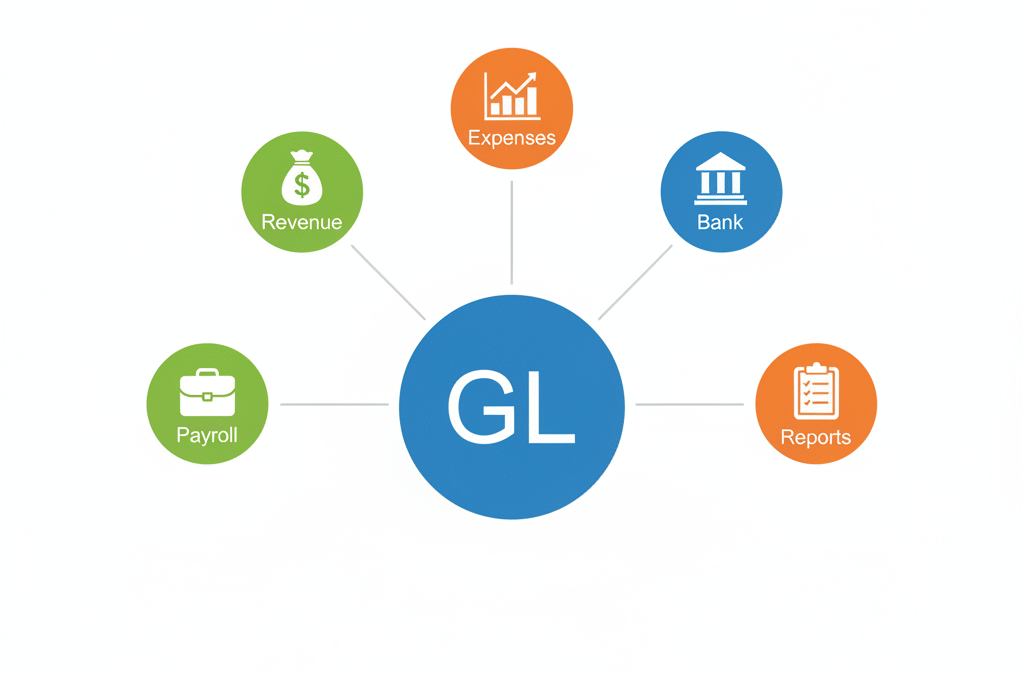
Article Summary:
Modern general ledger accounting software helps businesses streamline financial management through automation, real-time reporting, and cloud-based accessibility. Designed for companies of all sizes, it centralizes financial data, reduces errors, and provides actionable insights to support smarter business decisions.
Key Benefits:
-
Automated transaction processing and bank feeds
-
Real-time financial reporting and statements
-
Flexible chart of accounts management
-
Payroll integration and employee management
-
AI-powered automation for error detection and compliance
-
Cloud-based access for anywhere, anytime financial monitoring
-
Scalable solutions for small businesses and enterprise organizations
General ledger accounting software
Modern businesses require sophisticated financial management solutions that go beyond traditional spreadsheets and manual bookkeeping methods. Ledger accounting software serves as the foundation of your company’s financial transactions, providing a centralized system to track, manage, and analyze all accounting data with precision and efficiency.
What is general ledger accounting software?
General ledger software represents a comprehensive digital solution that records and organizes all financial transactions within your business. Unlike basic accounting tools or spreadsheet-based systems that often require manual data entry and are prone to errors, cloud based GL solutions automate transaction processing while maintaining accurate chart of accounts structures. Learn more about common chart of accounts mistakes that could cost your business.
The fundamental difference between modern ledger accounting systems and traditional methods lies in automation, integration, and real time capabilities. While manual processes can take months to reconcile and increase the risk of human error, advanced GL platforms streamline these operations into seamless, automated workflows that process financial data instantly.
Cloud accounting solutions offer distinct advantages over desktop-based systems, providing accessibility from any location while ensuring data import capabilities remain secure and complete. These platforms are designed to be flexible enough to accommodate businesses of any size while maintaining powerful analytical capabilities. If you’re starting out, see our guide on getting started with basic accounting principles.
Core features and capabilities
Automated transaction processing and bank feeds
Bank feeds eliminate the time-consuming task of manual data import and reconciliation. The system automatically categorizes transactions, updates account balances, and maintains audit trails for compliance purposes. This automation extends to:
- Payroll data integration
- Bank feeds synchronization
- Inter-account transfers
- Reconciliation processes
Real time transaction processing ensures that your financial statements reflect current business activity rather than outdated information. The software easily handles high transaction volumes while maintaining accuracy across all ledger accounts.
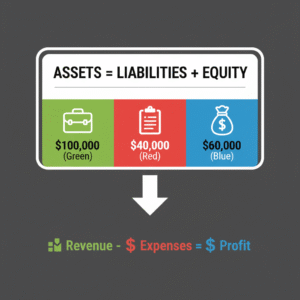 Chart of accounts management
Chart of accounts configuration provides the structural foundation for organizing financial data effectively. Flexible account hierarchies accommodate various business models and entity accounting requirements while supporting:
| Account Category | Purpose | Automation Level |
| Assets | Track company resources | Real time updates |
| Liabilities | Monitor payable obligations | Automated matching |
| Equity | Manage ownership interests | Daily calculations |
| Revenue | Record income streams | Instant recognition |
The system allows you to easily modify account structures as your business evolves, ensuring your chart of accounts remains aligned with operational needs without compromising historical financial data integrity. For a detailed example, check how to master bookkeeping essentials.
Financial reporting and statements
Financial reports transform raw transaction data into meaningful business insights that drive decision-making. Generate financial statements including profit and loss reports, balance sheets, and cash flow analyses instantly. These financial reports update automatically as new transactions process, providing stakeholders with current positions rather than outdated snapshots. Learn how to create your financial statement step by step.
Reviewers consistently highlight the importance of financial reporting capabilities when evaluating ledger software. Advanced systems offer customizable reporting templates that accommodate individual business requirements while maintaining standard accounting practice formats. See also mastering financial statements guide.
Payroll integration and employee management
Payroll integration streamlines employee compensation processing while automatically updating ledger accounts with labor costs and tax obligations. The system handles complex payroll data scenarios including:
- Employee wage calculations
- Tax withholdings and remittances
- Benefits administration
- Schedule tracking for hourly workers
Managing payroll through integrated GL software ensures consistency between compensation records and financial statements, eliminating discrepancies that often occur when using separate systems.
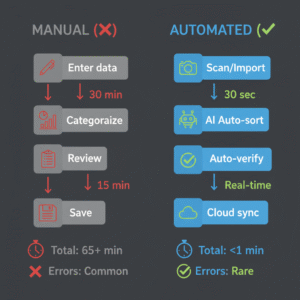 Advanced automation and cloud-based benefits
Real-time data processing
Real time financial data processing revolutionizes traditional accounting software workflows by eliminating period delays in financial reporting. Cloud based systems process transactions immediately, allowing businesses to monitor performance daily rather than waiting for monthly statement preparation.
AI-powered automation learns from historical patterns to suggest account classifications, detect anomalies, and identify potential compliance issues before they create problems. This intelligent processing reduces the workload on your accountant while maintaining accuracy standards required for successful financial management.
Flexible period management
Fiscal period management accommodates various reporting requirements and regulatory obligations. The system allows you to easily adjust period settings, manage multiple fiscal year configurations, and generate reports for any date range without compromising data integrity.
Project management integration
Project management connectivity enables detailed cost tracking and profitability analysis across specific initiatives or client engagements. This integration provides valuable insights for service-based businesses that need to monitor project performance and resource allocation effectiveness.
Complete project cost visibility includes labor, materials, overhead allocation, and expense categorization, ensuring accurate profitability calculations for each individual project or client engagement.
Business accounting solutions by size
Small business accounting
Small businesses benefit from easy-to-use interfaces that don’t require extensive accounting knowledge to operate effectively. Cloud accounting platforms offer complete business accounting functionality without the complexity typically associated with enterprise systems.
Features that small business reviewers value most include:
- Easy data import from existing systems (small business accounting guide)
- Powerful financial reporting without complexity
- Flexible pricing that scales with growth
- Complete integration with banking institutions
Enterprise financial management
Enterprise organizations require scalable solutions that handle high transaction volumes, multiple locations, and complex organizational structures. Powerful GL systems support advanced workflow approvals, departmental cost centers, and consolidated financial reporting across business units.
Database architecture designed for enterprise level operations ensures consistent performance regardless of transaction volume or user count. These systems easily accommodate thousands of daily transactions while maintaining real time reporting capabilities. For reference, check difference between general accounting and cost accounting.
Implementation and success factors
Data migration and setup
| Migration Step | Timeline | Success Factor |
| Data extraction | 1-2 weeks | Complete historical records |
| Chart of accounts setup | 3-5 days | Flexible structure design (chart of accounts guide) |
| User training | 2-3 weeks | Easy interface adoption |
| Go-live testing | 1 week | Powerful validation tools |
User training and adoption
Learn to use modern ledger software through comprehensive training programs that help teams transition from manual processes to automated workflows efficiently. Easy-to-understand interfaces and role-based access controls ensure that users can view and modify appropriate financial data while maintaining proper controls. See bookkeeping guide for entrepreneurs.
Demo sessions and hands-on training help individual users understand how features apply to their specific responsibilities, improving adoption rates and reducing implementation challenges.
Ongoing support and optimization
Successful long-term usage requires ongoing optimization and support. Cloud based solutions provide automatic updates and improvements without disrupting daily operations. Flexible configuration options allow businesses to adjust workflows and modify features as operational requirements evolve.
Regular reconciliation procedures ensure financial data accuracy while powerful audit capabilities provide transparency for internal reviews and external examinations by your accountant or auditing firm. Learn essential bookkeeping tips for small businesses.
Transform your financial management
Traditional accounting methods and basic software tools often create bottlenecks that limit business growth and increase operational risks. Modern ledger accounting software transforms these challenges into competitive advantages through automation, integration, and intelligent financial management capabilities.
Finotor provides a comprehensive solution that combines all these essential features into a single, integrated platform designed for growing businesses. Our AI-powered automation and seamless bank feeds help companies streamline their financial operations while maintaining the accuracy and compliance standards required for sustainable success.
Discover how modern general ledger software can transform your financial management processes and support your business growth objectives. Explore our comprehensive platform to see how automation and integration can eliminate manual processes while providing the financial insights needed for confident decision-making. For more accounting foundations, refer to introduction to financial accounting.