
Why Irish SPVs thrive: Tax efficiency & EU market access
Feeling the weight of financial risk holding your business back? 🚧 Ever wondered how companies like Ryanair finance fleets without draining cash reserves? That’s where an Irish SPV shines. This guide reveals how entrepreneurs use Ireland’s Section 110 SPVs to isolate liabilities, leverage EU-based common law stability, and execute cross-border deals (think: leasing jets or tokenizing SaaS revenue). With 70+ tax treaties and bankruptcy-remote structures, these SPVs turn high-stakes deals into low-risk wins. Spoiler alert: Tools like Finotor streamline finances—automating multi-currency payments, tracking complex transactions, and simplifying compliance. Ready to unlock tax neutrality and scale smarter? Let’s dive in. 💡🚀
- What is an Irish SPV and why should you care? 🤔
- The top 5 reasons Ireland is a hotspot for SPVs 🇮🇪
- A Deep Dive Into The Famous Section 110 SPV
- How Do Irish SPVs Work In Practice? Real-World Examples 🏢✈️
- Setting Up Your Irish SPV: The Key Steps And Structures
- The rules of the game: regulation and compliance for Irish SPVs 📜
- The future of Irish SPVs and managing your finances with ease ✅
What is an Irish SPV and why should you care? 🤔
Ever wondered how companies manage high-risk ventures without endangering their core business? 🎯 Meet the Irish Special Purpose Vehicle (SPV) – a legal entity isolating financial risks. Think of it as a vault: assets/liabilities stay separate from the parent company. If the parent fails, the SPV survives. This structure fuels deals like real estate ventures or loan securitization. 🏗️
Ireland’s a top SPV hub thanks to EU access, an English legal framework, and tax perks. Its Section 110 SPVs offer tax neutrality: deduct interest/financing costs to minimize taxable profits. Pair this with 70+ double-tax treaties, and you’ve got a gateway to global deals. Plus, a 12.5% corporate tax rate on trading profits sweetens the deal. 🇮🇪
Irish SPVs power securitization (e.g., turning loans into tradable bonds). Over 3,500 SPVs manage €1.1T in Ireland, fueling ⅓ of EU securitization. Euronext Dublin’s platforms and EU passporting ease cross-border investments. 💼
Pros: low tax, fast setup (5 days), EU compliance. Cons: need local governance, post-ATAD rules. Avoid misuse – Enron’s SPV scandal shows risks of opaque structures. Use tools like Finotor for clean reporting. For startups, an Irish SPV could offset $2M+ in costs – a lifeline for growth. 📊
Irish SPVs blend agility and regulation. Whether you’re securitizing loans or scaling a SaaS startup, they’re a bridge to EU markets. Ready to unlock this edge? 🚀
The top 5 reasons Ireland is a hotspot for SPVs 🇮🇪
Over 4,000 SPVs call Ireland home, managing €1T+ in assets. 🚀 Why? Let’s break down the magic formula: stability, tax perks, and legal clarity. Ready? Let’s go!
A stable and business-friendly environment
EU + OECD membership = rock-solid credibility. 🌟 As an EU member, SPVs tap into the single market (450M+ consumers). OECD alignment ensures compliance with global standards like BEPS 2.0, making Ireland a safe bet for regulators and investors. For example, post-Brexit, Dublin became a go-to for UK firms needing EU access—proof that stability pays off. 💼
Love U.S./UK legal frameworks? 🤔 Ireland’s Common Law system feels familiar. Example: 21% of Irish SPVs handle aircraft leasing. Common Law makes repossessing planes smoother—a win for global airlines. ✈️ Think of AerCap, a leasing giant using Irish SPVs to manage $50B+ in aircraft. No surprises? Just clear rules for buyers and sellers.
An attractive and efficient framework
Tax treaties are gold. 📜 74+ deals slash double taxation. Example: An SPV with U.S. bonds avoids 30% withholding tax via the Ireland-U.S. treaty. ECB data shows this boosts returns—ideal for securitization. 💡 Even better? Section 110 SPVs deduct 100% of interest costs, letting profits vanish before tax—no loopholes, just smart planning.
Need experts? 🤝 Ireland’s ecosystem delivers. Firms like Grant Thornton offer seasoned auditors, while Euronext Dublin lists 70% of EU securitization bonds. Even niche setups like “orphan structures” (shares held by charities) get mastered here. 🏦 Plus, the Irish Debt Securities Association (IDSA) acts as a lobby group, pushing for SPV-friendly laws. Talk about support!
Fast-track your SPV! ⚡️ Incorporation takes 3-5 days—cheaper than Luxembourg. Costs start at €2,000–€5,000 (setup + compliance), vs. €10K+ in Germany. Pro tip: Track finances with Finotor to stay compliant with Ireland’s 12.5% tax rate. 📊
- EU & OECD: Access 450M+ consumers + global tax transparency.
- Common Law: Predictable rulings for loans, leases, and carbon credits. 🌱
- Tax Treaties: Slash taxes on interest, royalties, and capital gains. 🧾
- Expert Network: Auditors, fiduciaries, and legal pros ready to help.
- Speed & Cost: 5-day setup + low fees = perfect for urgent deals. ⏳
Ireland’s blend of agility and rigor makes it SPV heaven. Plus, ESG-focused SPVs thrive here—like green loan securitization deals tapping EU sustainability rules. Ready to start? Finotor automates bookkeeping, so you focus on growth. 🚀
A Deep Dive Into The Famous Section 110 SPV
Section 110: Ireland’s Tax Neutrality Powerhouse 💡
The Section 110 SPV isn’t just another financial tool—it’s Ireland’s crown jewel for tax efficiency.
“The Section 110 of the Taxes Consolidation Act 1997 is the cornerstone of Ireland’s securitization regime, enabling qualified Irish resident SPVs to achieve tax neutrality on their financial transactions.”
By leveraging this framework, companies minimize taxable profits through strategic deductions. Think of it as a financial “reset button” for SPVs! 🔄 This mechanism helped Dublin become the #3 global shadow banking hub, handling €80B in Irish real estate debt through SPVs. 🏦 Apple’s 2020 €15B bond issuance via Irish SPVs shows real-world adoption!
How Tax Neutrality Works: Magic or Math? 🧮
Here’s the secret sauce: SPVs deduct expenses like interest paid to investors from their revenue. This creates a near-zero taxable profit. Imagine collecting €1M in income but writing off 99% through deductible costs. That’s the Section 110 advantage! 🚀 The system’s design even allows SPVs to use 100% debt financing through PPNs—no capitalization rules to block this approach. Remember: the Irish Revenue Commissioners actively monitor compliance through mandatory annual filings. Pro tip: Finotor’s dashboards automate these tax reporting workflows! 📊
Profit Participation Notes: The Invisible Hand 📝
PPNs are financial wizardry at its finest. These debt instruments let SPVs funnel nearly all profits back to investors as deductible interest. For example, a €50M profit becomes €50,000 taxable income after PPN magic. This flexibility attracts giants like Apple and Google to Irish shores! 🌍 Creative structures even use “Dutch Sandwich” techniques to minimize withholding taxes. Pro tip: Finotor’s compliance tools help track these complex cash flows automatically. 💼 Fun fact: PPNs often route through tax-neutral jurisdictions like Luxembourg for extra efficiency!
Qualifying Company Requirements: The 10M Euro Threshold 🎯
To join this elite club, you need:
- Irish tax residency
- Qualifying assets ≥€10M
- Irish-based management
- Formal tax notification
Legal analysis highlights show these requirements prevent abuse while maintaining competitiveness. Remember: this isn’t a tax loophole—it’s strategic planning! Bonus fact: 55B euros shifted to L-QIAIF funds when rules toughened in 2018. Why? L-QIAIFs skip public financial disclosures! 📁
Qualifying Assets: From Stocks To Airplanes ✈️
Section 110’s flexibility shines in asset diversity:
- Stocks & bonds
- Commodities (including carbon credits)
- Bank loans
- Derivatives
- Aircraft leases
Part of Ireland’s broader tax system, this variety explains why Dublin handles 15% of global aircraft financing. Need help managing these complex structures? Tools like Finotor (https://finotor.com) simplify compliance tracking and tax optimization. Fun fact: Irish SPVs finance everything from Brazilian wind farms to US hospital equipment! 🌎 Did you know? Even tech giants like Meta use Irish SPVs for data center financing! 💻
How Do Irish SPVs Work In Practice? Real-World Examples 🏢✈️
Theory is great, but how does this work in the real world? Let’s look at a few examples of entrepreneurs and businesses using an Irish SPV.
Case Study 1: An Aircraft Leasing Company
Meet Sarah, an entrepreneur launching an aircraft leasing business. 🛫 She creates an Irish SPV to purchase a plane, securing a loan to fund the acquisition. The SPV then leases the aircraft to an airline, collecting rental income to repay the loan. This structure isolates risks like defaults or accidents within the SPV, protecting Sarah’s other assets. 🛡️
Key takeaway? The SPV acts as a shield. Even if the airline fails to pay, Sarah’s personal wealth stays safe. Ireland’s legal framework, including the Convention Cape and IDERA agreements, ensures smooth repossession if needed. This is why over 25% of Irish SPVs focus on aviation leasing! 🌐
Case Study 2: A Tech Startup Raising Funds
Next, let’s talk about InnovateCo, a SaaS startup with recurring subscription revenue. 💡 They need cash now to scale. Solution? Transfer their subscription contracts to an Irish SPV. The SPV issues bonds backed by future revenue and sells them to investors. This securitization gives InnovateCo immediate capital for growth. 📈
Why choose Ireland? The Section 110 SPV regime offers tax neutrality, making cross-border deals efficient. Plus, Ireland’s EU access and English-speaking expertise streamline processes. Over 3,500 SPVs in Ireland now use similar strategies! 📊
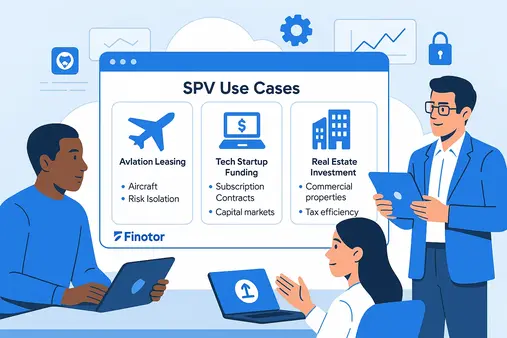
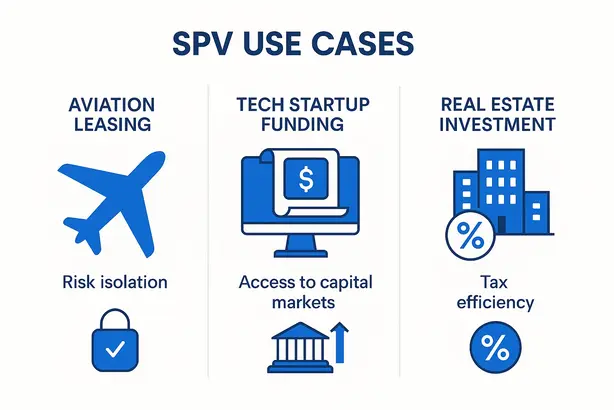
| Use Case | Asset Type | Main Goal | Key Benefit for the Entrepreneur |
|---|---|---|---|
| Aviation Leasing | Aircraft | To finance and lease a high-value asset | Risk isolation from the main business |
| Tech Startup Funding | Subscription Contracts (Future Revenue) | To raise immediate cash for growth | Access to capital markets through securitization |
| Real Estate Investment | Commercial Properties | To acquire and manage a property portfolio | Tax efficiency and streamlined profit distribution to investors |
These examples highlight why Ireland is a go-to for SPVs. 🌍 From aviation to tech, the SPV structure offers risk protection, tax efficiency, and EU market access. But it’s not just big players—any entrepreneur can leverage this! Need help managing your SPV’s finances? Tools like Finotor simplify invoicing, expense tracking, and compliance. 🧾
Setting Up Your Irish SPV: The Key Steps And Structures
Ready to create an Irish SPV? Let’s break it down. 🚀
Choosing The Right Legal Form
Most Irish SPVs use a Designated Activity Company (DAC) structure. Why? Its activities are limited to its constitution, giving investors peace of mind. 🛡️ DACs can list securities on markets like Euronext Dublin, ideal for asset-backed deals. The LTD format is an option, but DACs dominate for securitization. Need guidance? Check setup steps for streamlined incorporation.
The Orphan Structure Concept
Worried about bankruptcy? The orphan structure protects your SPV. Shares are held by an Irish charitable trust, not the parent company. Example: A global bank might use this to isolate risks when securitizing loans. If the parent fails, assets stay safe. Think of it as a financial “force field”! 💡
Key Requirements
Ensure compliance with:
- At least one Irish-resident director (providers like Finotor handle this).
- A registered Irish address for legal alignment. 💼
This setup meets Ireland’s “management and control” tax residency test, ensuring your SPV stays compliant.
Step-By-Step Guide
- Define the purpose: Outline the transaction and assets. Example: A startup might use an SPV to isolate risks during funding.
- Choose a DAC: Ensures clarity and investor trust. DACs can list securities, boosting liquidity.
- Appoint directors: Use Irish-resident experts. Try Finotor for compliance and reporting.
- Register online: File with the Irish CRO in 3-5 days—quick and cost-efficient.
- Notify authorities: Inform the Irish Revenue (via Section 110 tax regime) and Central Bank. Submit quarterly data to meet deadlines.
Follow these steps to build an SPV that leverages Ireland’s tax efficiency, EU access, and legal strength. 🌍 Ready to unlock these benefits? Let’s go! 💼
The rules of the game: regulation and compliance for Irish SPVs 📜
Did you know Irish SPVs aren’t a “free zone” for financial loopholes? 💡 The Central Bank of Ireland (CBI) enforces strict oversight! 🏦 Every Irish SPV must submit quarterly financial reports, ensuring transparency. Think of the CBI as the gatekeeper—it’s not just a formality. For example, if you’re managing a Section 110 SPV, missing a deadline could mean penalties. Compliance isn’t optional; it’s the backbone of Ireland’s reputation as a credible EU financial hub. 📊
Irish SPVs also play by global rules. 🌍 They must align with FATCA (U.S. tax reporting) and the Common Reporting Standard (CRS) for cross-border tax transparency. Plus, EU directives like ATAD (Anti-Tax Avoidance) add layers of accountability. Imagine operating in a bubble—these frameworks prevent that! 🌐 For startups using SPVs, tools like Finotor can simplify compliance, automating tax reporting and risk management. This isn’t just red tape; it’s your ticket to accessing EU markets and building investor trust. 💼
Let’s address the elephant in the room: vulture funds. 🏚️ In the 2010s, some SPVs exploited real estate loopholes, sparking controversy. The Finance Act 2016 cracked down, closing tax avoidance gaps for Irish property deals. While past issues exist, today’s SPVs are far from the “wild west” stereotype. As the CBI states:
“Irish SPVs are not a ‘wild west’ of finance. They are regulated entities with strict reporting obligations, ensuring transparency within the EU’s robust financial framework.”
Compliance isn’t just about rules—it’s about credibility. 🧾
The future of Irish SPVs and managing your finances with ease ✅
Irish SPVs are evolving with global financial trends. 🌍 By 2024, the country hosted over 4,450 SPVs holding €1.14 trillion in assets. Let’s explore the key trends shaping their future.
Green finance is reshaping the SPV landscape. 🌱 More SPVs now fund eco-friendly projects like solar loans and renewable energy receivables. Ireland’s alignment with EU Green Bond Standards positions it as a leader in ESG-aligned securitization.
Section 110 SPVs remain central. 📜 These entities dominate 37.5% of Ireland’s SPV market. Their tax-neutral structure lets companies deduct expenses, making cross-border deals seamless for firms like Boeing and BlackRock.
Managing SPVs can feel overwhelming. 🤯 Multi-currency transactions and EU compliance eat time. Finotor solves this.
Finotor automates financial tracking, tax-neutral reporting, and real-time analytics. 💡 Simplify VAT calculations across EU jurisdictions or generate audit-ready docs with one tool.
Irish SPVs are strategic tools. 📊 Key takeaways:
- Risk & Reward: SPVs isolate liabilities while optimizing tax efficiency through DACs.
- Section 110 Magic: Achieve tax neutrality via deductible costs and exemptions like the “quoted Eurobond” clause.
- EU Access: Use Ireland’s 76 tax treaties and EU passporting rights to scale cross-border deals.
- Compliance Reality: Non-compliance with CBI rules risks losing bankruptcy remoteness—a core SPV benefit.
Challenges exist—rising ESG rules and geopolitical volatility. 📉 But tools like Finotor automate 80% of transaction tracking, letting you focus on growth. Ready to future-proof your SPV? 🚀
Irish SPVs are a game-changer for entrepreneurs 🚀 With risk isolation, tax efficiency, and EU access, they’re ideal for global ventures. But managing high-volume transactions? That’s where Finotor steps in! 💼 Automate financial tracking, simplify compliance, and boost agility. Ready to streamline your SPV’s success? Try Finotor today! 💰 [finotor.com](https://finotor.com)
FAQ
What does SPV stand for?
SPV stands for Special Purpose Vehicle 🎯—a legal entity created for a specific, narrow objective, like financing a big project or isolating financial risk. Think of it as a “one-task-only” company! For example, a tech startup might use an SPV to raise funds for a new app without risking its core business. Ireland’s SPVs, especially under Section 110, are gold standards for tax efficiency and legal clarity.
What are some examples of SPVs?
SPVs pop up everywhere! 🌍 Here’s the fun part: – Aviation leasing: Sarah, an entrepreneur, uses an Irish SPV to buy and lease out a plane. If the airline defaults, her other assets stay safe. – Tech startups: A SaaS company sells its subscription revenue to an SPV, which issues bonds to investors. Cash? Instantly unlocked! – Real estate: An SPV pools commercial properties to attract international investors. For managing these complex transactions, tools like Finotor save time and stress.
What is the Irish orphan structure?
The Irish orphan structure is like a financial “ghost town” 👻—the SPV is owned by a charitable trust, not the parent company. This ensures the SPV stays bankruptcy-remote: if the parent company crashes, the SPV’s assets stay untouched. It’s a favorite for securitizations (e.g., turning loans into tradable bonds). Bonus: Ireland’s common law system makes this setup super smooth 🇮🇪.
Why are so many funds domiciled in Ireland?
Ireland’s SPV appeal? Let’s break it down 🔑: – EU & OECD membership: Access to Europe’s market + global credibility. – Tax treaties: Over 70 agreements to slash double taxation (hello, 10M+ qualifying assets!). – Speed & ease: Set up an SPV fast with expert legal/financial services. – Section 110 magic: Tax neutrality that makes cross-border deals a breeze. Check out Finotor to manage your SPV’s finances without headaches.
Who is the SPV?
The SPV is your financial bodyguard 🛡️—a separate legal entity that owns specific assets (like a portfolio of loans) and nothing else. For instance, if a corporation uses an SPV for aircraft leasing, creditors can’t touch its other assets if things go south. It’s like having a vault for your most valuable projects!
Can humans get Shope papilloma virus?
Nope! 😅 Shope papilloma virus (SPV) is a rabbit disease—totally unrelated to our financial SPV! Don’t let the acronym confuse you. Focus on Ireland’s SPVs for tax-smart deals, and leave the “bunny SPV” out of it.
Who typically uses SPVs?
From startups to Fortune 500s 👩💼: – Corporations: Securitize loans or isolate risky ventures. – Private equity firms: Pool investments without cross-contamination. – Real estate moguls: Buy/sell properties via SPVs to simplify ownership. – Tech founders: Raise capital by selling future revenue streams. Need help tracking your SPV’s cash flows? Finotor automates the boring stuff.
What is SPV disease?
Same acronym, different world! 🤪 In finance, SPV = Special Purpose Vehicle. The “disease” version (Shope papilloma) only affects rabbits. Moral of the story: Stick to Ireland’s SPVs for business wins, not vet visits.
What are the different types of SPV?
Ireland’s SPVs are the stars, but here’s the lineup 🏆: – Section 110 SPVs: Tax-neutral giants for securitization (e.g., bond issuance). – Orphan SPVs: Owned by trusts for bankruptcy protection. – Project-specific SPVs: Think wind farms or movie financing. – Fintech SPVs: Bundle loans or crypto assets for investors. Pro tip: Section 110 requires 10M+ in qualifying assets—like aircraft or derivatives. Use Finotor to track those assets effortlessly!