This Resource Includes
· Resources to gain in-depth and clear guides to the fundamentals of accounting
· Where to learn practical bookkeeping principles to help keep your start-up’s money in order.
· Websites that offer interactive lessons on calculations and explanations related to finance.
As a new start-up founder or small business owner, mastering bookkeeping is building a strong foundation on your business books. Whether you’re starting out in accounting or wanting to polish your finances, the right resources are everything. Here is a smart collection of six online resources where you can learn everything from accounting fundamentals to bookkeeping tips to how to keep your start-up’s finances in check.
Accounting Coach
Website: AccountingCoach.com
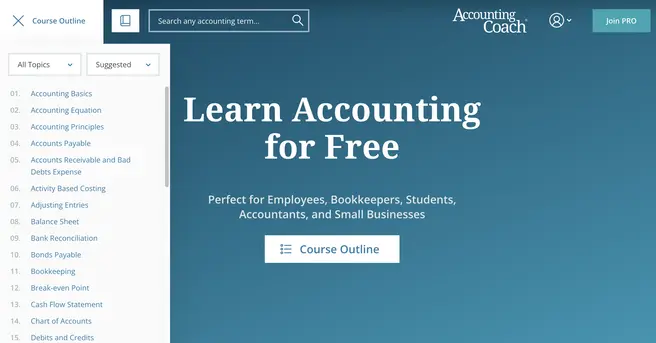
Accounting coach with Finotor
Accounting Coach is a well-established resource that simplifies the basics of accounting and bookkeeping. Harold Averkamp, who created the site, offers thorough tutorials, quizzes, and articles on topics ranging from basic double-entry bookkeeping to advanced concepts like financial statement analysis. Accounting Coach is a fantastic place for founders of early-stage start-ups to start firming up a basic understanding of accounting principles without getting lost in technical language, with its simple language and relatable examples.
The Balance
Website: TheBalanceSMB.com
The Balance Small Business is a site aimed specifically at small business owners and start-ups, filled with articles, checklists, and practical guides for successful financial management. The material simplifies basic principles like budgeting, cash flow handling, and correct bookkeeping. Its approachable style means even the uninitiated can learn how to keep their books in good order while also building the financial savvy needed for smart business decisions—trustworthy reference points as you develop your start-up’s finances.
U.S. Small Business Administration (SBA)
Website: SBA.gov
The U.S. Small Business Administration offers authoritative, government-backed resources designed to aid small businesses in navigating the complexities of financial management and regulatory compliance. Guides, webinars, and online courses on the SBA website cover topics like bookkeeping fundamentals, tax compliance, and strategic budgeting. If you’re a U.S.-based start-up founder, the resources from the SBA can be extremely helpful in making sure your financial practices are legally compliant and in building a better understanding of good accounting practices.
On the topic of business administration, you might want to also read our resource article, which explains business administration as a concept. It offers plenty of practical daily tips for efficiency in this area for small business owners.
Finotor: Learn About Accounting Automation
It provides lessons in accounting with insight into financial calculations and insights that can enhance your understanding. Finotor also offers a lot of information about accounting automation and how to use and leverage it for success. Recent article-based lessons include Break Even Analysis to cash flow forecasting, budgeting, and other key figures. The platform takes a theoretical approach but supplements it with real-life examples, helping you understand the manner in which complicated calculations are used within real-world business cases.
Finotor’s tips and advice are tailored to be useful for start-up founders and small business owners so even those without a formal accounting background can understand and leverage the concepts effectively. With clear and concise explanations and step-by-step accounting guides.
SCORE
Website: SCORE.org
SCORE is a national nonprofit that works with the SBA to provide free mentoring and educational resources to small business owners. SCORE offers real-world advice about the accounting and bookkeeping worlds in the form of a huge library of articles, templates, and webinars. Best of all, their mentor experts are on hand to provide tailored guidance, with the help of whom you can also overcome common financial hurdles and make further progress. If you’re a founder in search of financial guidance that meets you where you are, SCORE provides practical advice and strategies for start-ups to optimize their bookkeeping and avoid common pitfalls.
American Institute of Certified Public Accountants (AICPA)
Website: AICPA.org
The American Institute of CPAs is the leading organization of its kind. AICPA is primarily a group for professionals. But their resources also include information useful for most startup founders, and there is a section of the website with educational materials, too. AICPA offers a range of guidance on current accounting standards, emerging trends in financial management, and more through its webinars, research publications, and timely industry updates. So, for start-ups, the key takeaway—following these industry benchmarks can help you achieve accuracy, compliance, and long-term financial sustainability with your bookkeeping practices.
Final Thoughts
Having good bookkeeping is not just about writing down transactions; it’s about creating a strategic asset to help inform decision-making and drive business growth. Take advantage of these six online resources: Accounting Coach, The Balance, SBA.gov, Finotor, SCORE, and AICPA. You can get a full-fledged knowledge of accounting fundamentals—get practical tools—and take advantage of expert advice tailored to the common needs of start-ups.
Each resource has its own unique benefits, ranging from clear, beginner-friendly tutorials and government-backed guidance to interactive lessons on financial calculations and personalized mentorship. Take advantage of these platforms to improve your financial management skills, literally and practically, and set yourself up for success in the long run as a start-up.